
Why Your Florida Electric Bill Jumped
In a Florida home the air conditioning is most of the bill, so a bill that jumps is usually the system telling you something.
Not an emergency
Not an emergency, but not something to absorb either. Most of the causes get worse rather than better, and several of them are also shortening the life of the equipment.
Air conditioning is the largest single load in almost every Florida home, so when a bill steps up without a change in how the house is used, the system is usually the reason. The useful distinction is between a bill that has crept up over years — which is normal degradation plus rates — and a bill that jumped in one or two cycles, which is a fault.
The most dramatic and most overlooked cause is auxiliary heat. Florida homes with heat pumps have electric resistance strips for the handful of genuinely cold nights, and those strips draw several times the power of the heat pump itself. A staging or lockout fault that leaves them running whenever heat is called for produces a winter bill three or four times what it should be, and nothing about the house feels wrong — it is warm, it is just costing a fortune. It is invisible unless somebody looks for it.
In summer the usual answers are less dramatic and more cumulative: a coil that can no longer reject heat, a charge that has leaked down so the system runs longer for the same result, ducts leaking conditioned air into an attic, or a system that short-cycles because it was oversized. Each of those makes the equipment run more to achieve less, which is precisely what a rising bill measures.
Before you call anyone
Check these first — they cost nothing
- Compare the bill against the same month last year, not last month — Florida seasonality is enormous
- Check whether the rate itself changed; utilities do adjust
- Change the filter, and note how long it had been in there
- Look at the outdoor coil — if you cannot see through the fins, it cannot reject heat
- Check whether anything changed in the house: a new appliance, a pool pump, more people home
- If it is a winter bill, look at whether the emergency or auxiliary heat setting has been left on
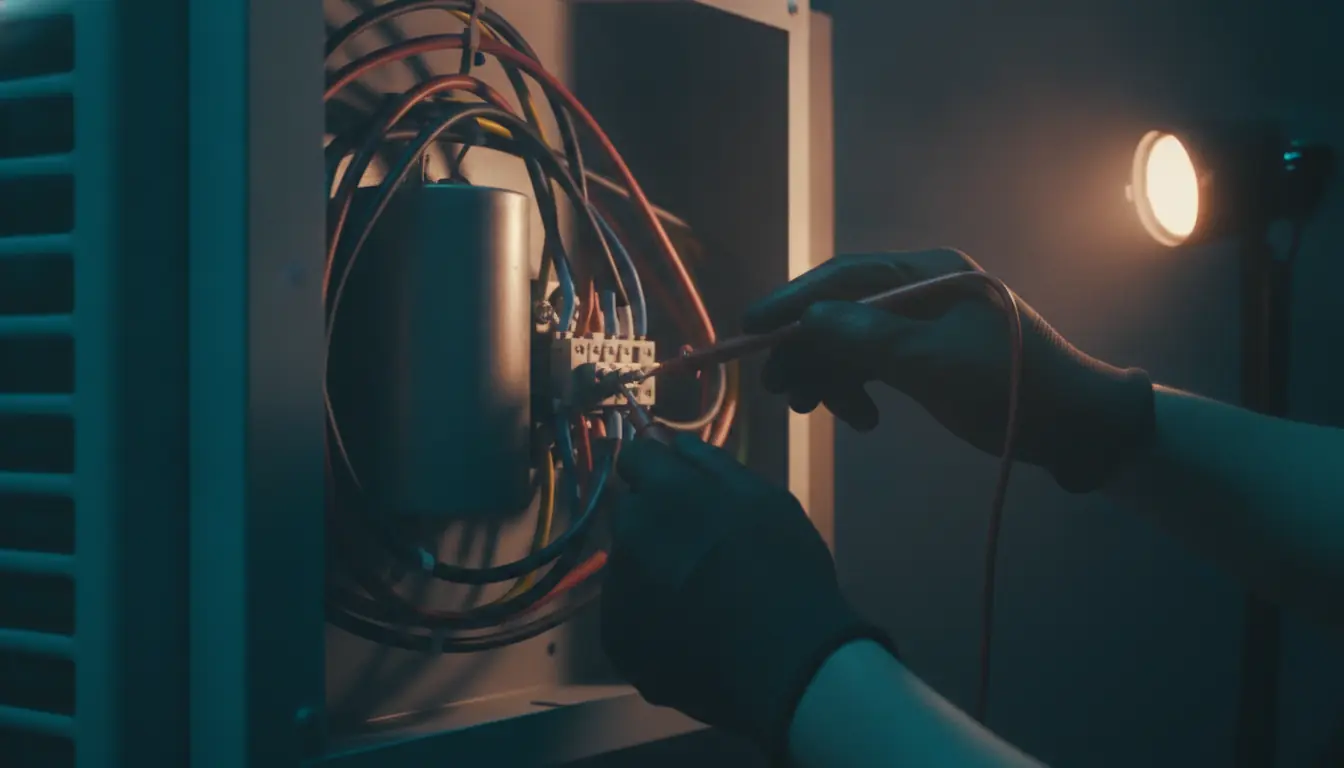
If the checks above do not resolve it, the causes below need instruments — pressures, temperature split and static pressure — rather than guesswork.
What it usually turns out to be
Auxiliary heat strips running when they should not
The biggest single line-item fault we find in Florida winters. A staging or lockout problem, and often a thermostat left on 'emergency heat'. The house is warm and the bill is enormous.
A dirty or corroded condenser coil
The system runs longer and at higher pressure to shed the same heat. On the coast, salt corrosion does this steadily and invisibly.
Low refrigerant charge
Reduced capacity means longer run times for the same result. The bill often rises before the comfort complaint does.
Duct leakage into the attic
Paying to cool a 130-degree attic, and pulling that attic air back in through return leaks. One of the largest and least visible losses in Florida homes.
Low airflow from a dirty blower or blocked returns
The blower works harder, the system runs longer, and the coil runs colder than it should. Also the leading cause of the freezing that follows.
An oversized system short-cycling
Frequent starts are the most expensive part of running a compressor, and short cycles remove very little humidity — so the house is less comfortable as well as more expensive.
High Electric Bill — common questions
How much of my bill is the air conditioning?
In a typical Florida home it is the largest single component by a wide margin, particularly in summer. That is why a change in the bill is a useful diagnostic signal here in a way it would not be in a milder climate.
Would a new system fix it?
Sometimes — but not before finding out why the current one is costing what it is. Fitting new equipment to leaking ducts or a fault in the auxiliary heat staging buys a smaller version of the same bill, at considerable expense.
Is it cheaper to leave it on all day or turn it off when out?
In Florida, a modest setback beats switching it off entirely. A house allowed to get genuinely hot and humid takes a long, expensive run to recover, and the humidity has to be removed all over again. Setting back a few degrees rather than off is usually the better trade.
Related symptoms
AC Not Cooling
The system is running, air is coming out, and the house still will not get to the thermostat setting.
Read moreFrozen AC
Ice on the copper line, the indoor coil or the outdoor unit — always caused by one of two things, and neither of them is 'it's cold'.
Read moreAC Blowing Warm Air
Air is moving normally but it is warm — which usually means the cooling side has stopped, not the fan.
Read moreWant someone to just look at it?
Open 24 hours, 7 days a week. Someone answers the phone at 3 AM. Not a machine.