
AC Running But Not Cooling — What's Actually Wrong
The system is running, air is coming out, and the house still will not get to the thermostat setting.
Worth attention today
Not usually an emergency in the first hours — but in Florida a house that cannot hold temperature also cannot hold humidity, and that is what starts damaging the building.
This is the most common HVAC complaint in Florida and also the most misdiagnosed, because 'not cooling' is a symptom with at least a dozen causes that do not cost remotely the same to fix. The single most useful thing you can establish before anyone visits is whether air is still coming out of the vents, and whether that air is cold, cool or room temperature. Those three answers point at three different halves of the system.
If air is coming out and it is genuinely cold, but the house never gets there, the problem is usually capacity or distribution — the cold air is being made and not delivered, or is being made too slowly for the heat coming in. If air is coming out and it is not cold, the problem is on the refrigeration side. If barely any air is coming out at all, it is airflow, and airflow problems frequently masquerade as refrigerant problems, which is how people end up paying for gas the system did not need.
Before you call anyone
Check these first — they cost nothing
- The air filter — a filter clogged solid will cause exactly this, and it costs nothing to check
- Every supply register in the house is open, and no furniture is blocking a return grille
- The thermostat is set to COOL and to a temperature genuinely below the room temperature
- The outdoor unit is running, and its fan is spinning
- The outdoor coil is not packed with grass clippings, leaves or salt residue
- No ice on the copper lines or the indoor coil — if there is, switch the system to FAN ONLY and let it thaw before anyone comes out
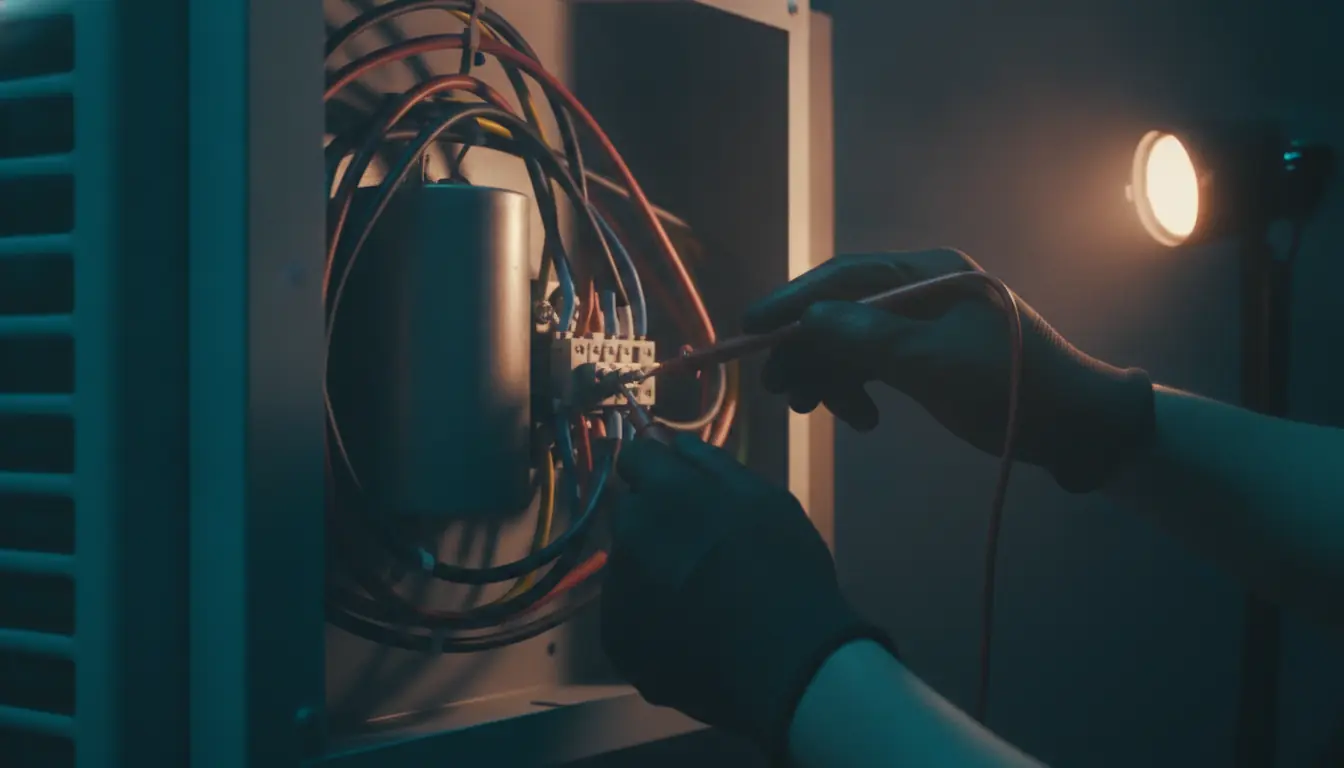
If the checks above do not resolve it, the causes below need instruments — pressures, temperature split and static pressure — rather than guesswork.
What it usually turns out to be
Low refrigerant charge from a leak
The most-cited cause and the one most often 'fixed' badly. Refrigerant is not consumed — if it is low there is a leak, and topping it up without finding the leak means paying again next season.
A dirty or corroded outdoor condenser coil
The coil rejects the heat the system collected. Blocked with debris or corroded by salt, it cannot, so head pressure climbs and capacity collapses. Extremely common near the coast.
Low airflow across the indoor coil
A loaded blower wheel, undersized returns or leaking ducts. The coil gets too cold, capacity drops and eventually it freezes — which then blocks airflow completely.
Duct leakage into an attic
Conditioned air escaping into a 130-degree attic, and hot humid attic air pulled back in on the return side. The equipment tests perfectly and the house is still uncomfortable.
A failing compressor
The system runs and circulates air but is no longer compressing effectively. This is the expensive answer, which is exactly why it should be confirmed by measurement, not assumed.
A system that was oversized when it was installed
Reaches the set temperature quickly, shuts off before removing moisture, and leaves a house that reads cool on the thermostat and feels clammy. No repair fixes this; sizing does.
AC Not Cooling — common questions
How cold should the air from the vents be?
As a rule of thumb, roughly 16–22°F colder than the air going into the return. That difference is called the temperature split and it is one of the first things we measure. A split much smaller than that says the system is not doing its job; a split much larger usually means airflow is too low.
Should I just add refrigerant?
Only as a deliberate stopgap on a system already scheduled for replacement, and only knowing that is what it is. Refrigerant sits in a sealed loop. If it is low, it is leaking, and a recharge without a leak repair is a fee for postponing the same call.
Is it worse to run it or turn it off?
If there is ice anywhere on the system, turn the cooling off and run the fan only — running it iced up can damage the compressor. Otherwise it is usually fine to keep running while you wait, and in Florida humidity there is a real argument for doing so.
Related symptoms
AC Blowing Warm Air
Air is moving normally but it is warm — which usually means the cooling side has stopped, not the fan.
Read moreFrozen AC
Ice on the copper line, the indoor coil or the outdoor unit — always caused by one of two things, and neither of them is 'it's cold'.
Read moreHigh Electric Bill
In a Florida home the air conditioning is most of the bill, so a bill that jumps is usually the system telling you something.
Read moreWant someone to just look at it?
Open 24 hours, 7 days a week. Someone answers the phone at 3 AM. Not a machine.